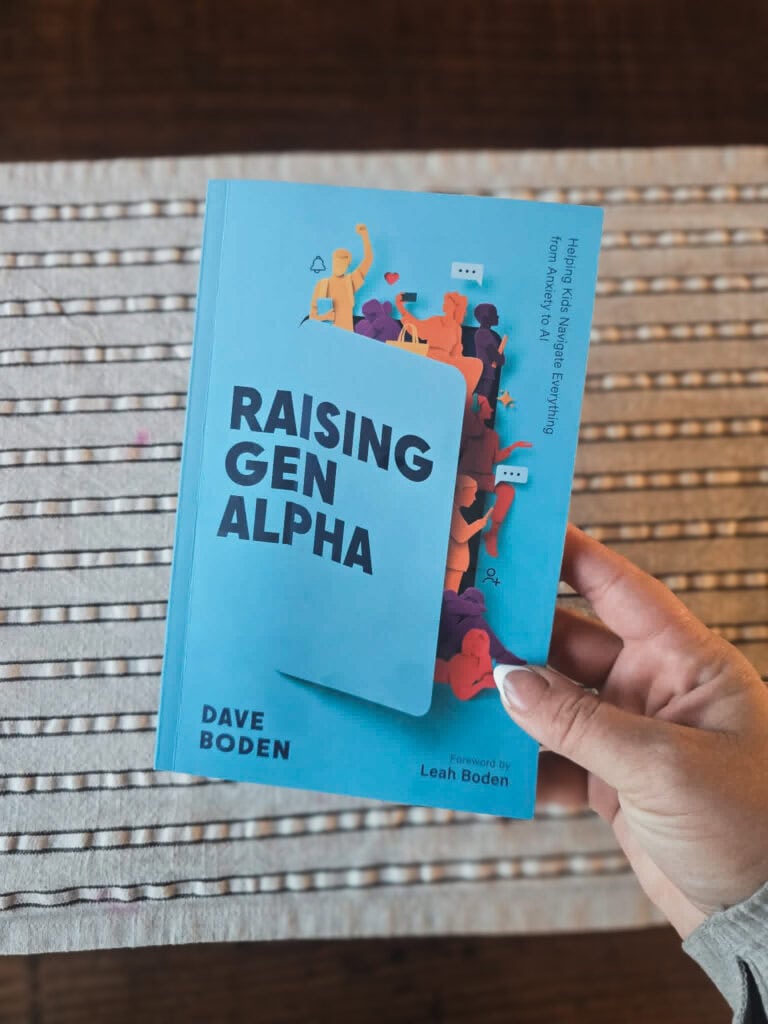
When I first heard about Raising Gen Alpha by Dave Boden, I was immediately intrigued—and honestly, a big part of that was because of his wife, Leah Boden. As a homeschool mom, Leah’s work has deeply encouraged and inspired me over the years. Modern Miss Mason impacted the way I think about education, atmosphere, and the beauty of learning at home, so naturally, when I saw that Dave had written a book about understanding the next generation, I was eager to read it.
I was sent this book for review by New Growth Press, and I genuinely found it to be one of the more insightful and practical parenting books I’ve read in a long time.
This page may contain affiliate links. To view my full affiliate link disclosure, click here. There are Amazon affiliate links in this post. As an Amazon Associate, I make a small commission from Amazon links in this post. Find our privacy policy, terms of service, and more information about user data by visiting the links above.
A Refreshing Perspective on Raising Gen Alpha
One of the things I appreciated most right from the beginning was that this book doesn’t approach Gen Alpha with fear or cynicism. So many conversations around kids today feel heavy with criticism—technology is ruining them, social media is destroying them, attention spans are gone, and everything feels hopeless. But Dave Boden takes a very different approach. Instead of teaching parents to fear this generation, he encourages us to understand them.
In the introduction, he writes:
“This book, is first and foremost, a guide for parents – helping them understand that since 2010, it’s as if every child is born with a unique pair of ALPHA glasses that shape how they see the world. When you see life through their lens, hopefully your perspective will shift for the better.”
That quote really captures the heart of the entire book.
The ALPHA Framework
As a mom raising children squarely in Gen Alpha, I found myself stopping often while reading and thinking, Wow… that actually explains so much. Dave gives language to things many parents have sensed but maybe haven’t fully understood. He walks through the acronym ALPHA—Anxious-minded, Leading influencers, Pandemic-impacted, Hyperconnected, and AI-shaped—and explains how these realities have uniquely formed this generation of children.
What I appreciated is that the book is incredibly balanced. It doesn’t ignore the very real challenges our kids face. Anxiety, overstimulation, screens, social pressure, AI, and digital dependency are all discussed honestly. But the tone is never panicked. It’s grounded, thoughtful, compassionate, and deeply hopeful.
What Resonated With Me as a Mom
As someone who spends a lot of time thinking about motherhood, homeschooling, faith, and creating a peaceful home atmosphere, I resonated with so much of what he shared. There were moments where I felt convicted—not in a shame-filled way, but in a gentle reminder that our children are growing up in a vastly different world than we did. Sometimes we parent from our own childhood lens instead of recognizing that our kids are navigating pressures we never had to carry.
The chapter on anxiety especially stood out to me. I think many moms today can see the emotional weight children are carrying, even at very young ages. Dave doesn’t just throw statistics around or offer shallow solutions. He encourages adults to become safe, grounded people who listen well, disciple intentionally, and create environments where children feel seen and secure. That really stayed with me.
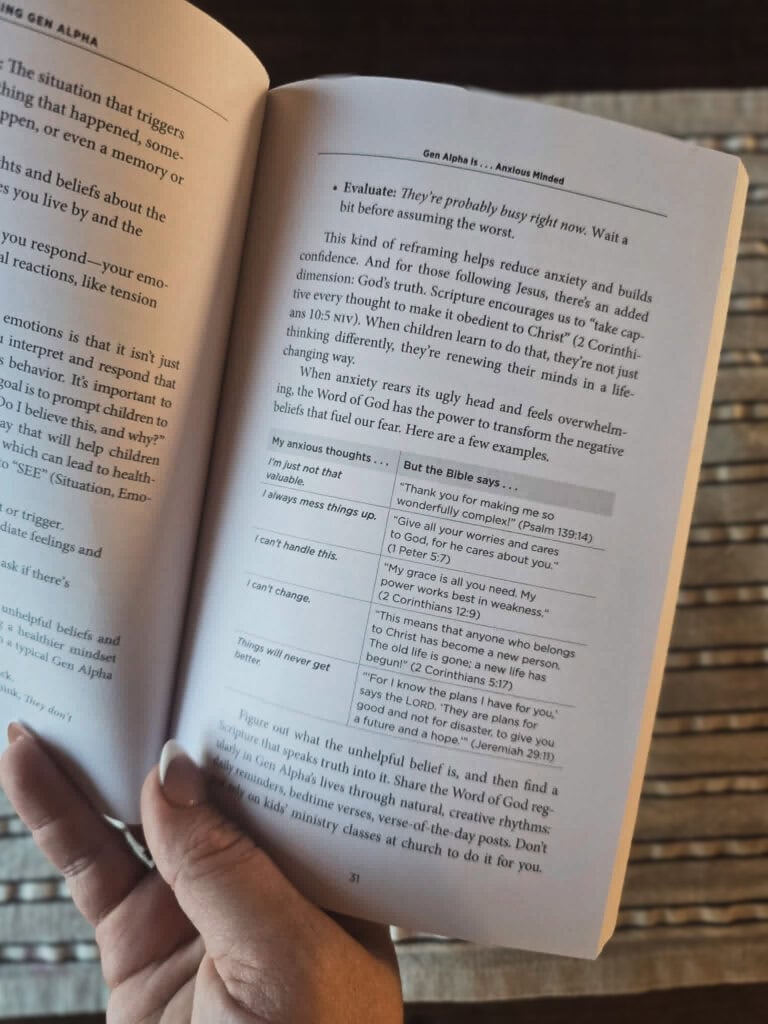
There’s a chart on page 31 that I think every parent raising a child in Gen Alpha needs to see and maybe even post a copy on a noteworthy place in their home. The chart has two headings: “My anxious thoughts…” and “But the Bible says…”. It’s a powerful chart that I think everyone in a family, regardless of their generation, could benefit from.
Biblically Grounded Without Fear
I also appreciated that while the book is culturally aware, it stays biblically grounded throughout. It never feels like trendy psychology wrapped in Christian language. Faith remains central. The message isn’t simply “understand your kids better,” but rather “understand them so you can lead and disciple them well.”
That distinction matters.
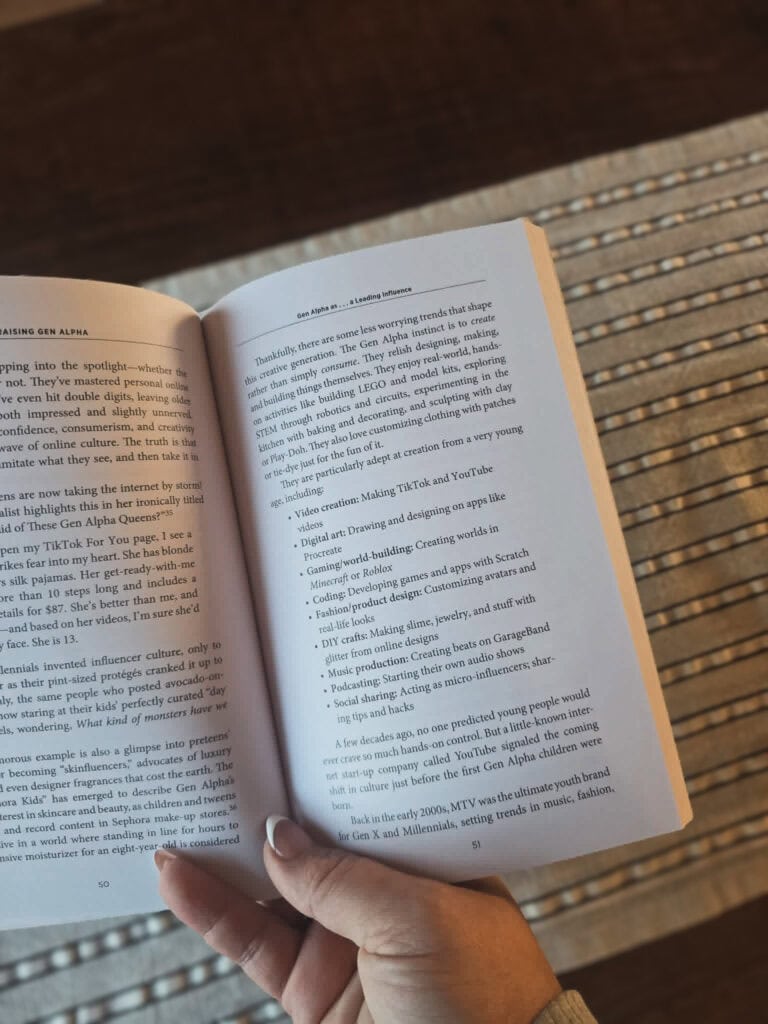
Another thing I loved was that the book felt incredibly readable. Some parenting books can feel overly academic or dense, but this one felt conversational and practical. Dave writes in a way that feels accessible to everyday parents, educators, pastors, and homeschool moms alike. I could easily see this becoming a discussion book in parenting groups, church communities, or even homeschool circles.
A Message Rooted in Compassion
And honestly, I think one of the strongest themes throughout the book is compassion.
Instead of viewing Gen Alpha as “the problem,” Dave continually reminds readers that these children are image bearers growing up in an unprecedented cultural moment. They don’t just need stricter rules or better systems—they need adults who truly see them, understand them, and walk alongside them with wisdom and grace.
As a mom of five boys, I found myself reflecting deeply while reading this. It challenged me to think about the atmosphere in our home, the pace of our lives, our relationship with technology, and even how I communicate with my children. It reminded me that discipleship often happens in ordinary conversations, quiet moments, and consistent presence.
I also appreciated that the book didn’t feel anti-technology while still acknowledging the dangers technology can bring. That balance can be hard to find. Rather than simply condemning AI or social media, Dave encourages readers to thoughtfully engage with the world Gen Alpha is growing up in instead of pretending it doesn’t exist.
Final Thoughts
Overall, I would absolutely recommend Raising Gen Alpha to parents, homeschoolers, youth leaders, teachers, pastors, and, honestly, anyone who interacts regularly with children and teens today. Whether your kids are toddlers or teenagers, this book offers a valuable perspective and practical encouragement.
For me personally, this book felt less like a manual full of parenting formulas and more like an invitation to slow down, pay attention, and truly understand the children we’ve been entrusted with.
And in a world that moves incredibly fast, that reminder feels more important than ever.
Don’t Forget to Pin for Later!