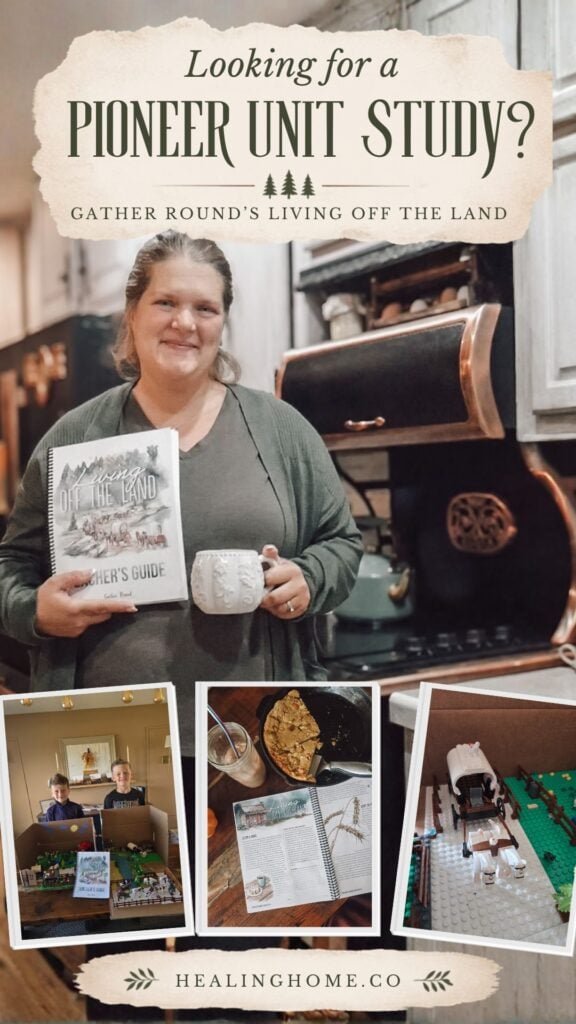
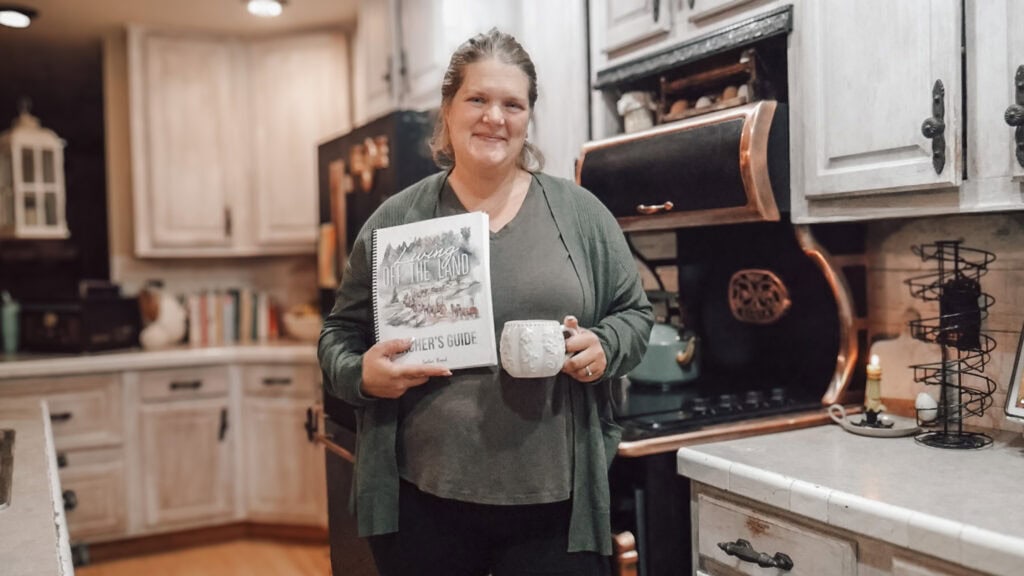
Looking for a Pioneer Unit Study? See how we used Gather Round’s Living Off the Land unit study, including hands-on activities, field trips, books, and our pioneer homestead dioramas.
If you’re looking for a homeschool unit study that gives your children a hands-on look at what it was like to homestead or live off the land during the pioneer days, Gather Round’s Living Off the Land unit study might be one to put on your list.
We recently worked through this unit as a family, and today I want to share what we enjoyed, a few things I wish had been different, and some of the extras we added along the way.
If you’re new to Gather Round Homeschool, I have quite a few other Gather Round curriculum reviews here on the blog and over on YouTube. Those reviews will give you a deeper understanding of how Gather Round works, particularly its family-style approach to learning and the way the different levels allow multiple ages to study the same topic together.
- My Gather ‘Round Review
- Unit Study Picks 2025-2026
- Vikings Unit Study Review
- The First Christmas Unit Study Review
- Oceans Unit Review
- Dinosaurs Unit Review
- 2026-2027 Unit Study Picks
For this review, though, I want to focus specifically on Living Off the Land and whether I think it works well if you’re looking for a pioneer-themed homeschool unit study.
Welcome to Healing Home. I hope you are encouraged and inspired by your time here.
This page may contain affiliate links. To view my full affiliate link disclosure, click here. There are Amazon affiliate links in this post. As an Amazon Associate, I make a small commission from Amazon links in this post. Find our privacy policy, terms of service, and more information about user data by visiting the links above.
Living Off the Land: Is It a Pioneer Study?
The first question I had going into this unit was whether I would consider it a true pioneer unit study. And I think the answer is…yes, but with a little bit of clarification.
The unit does a wonderful job of introducing children to many aspects of pioneer life and what it meant to live without the conveniences we have today. There are opportunities to explore things like food, shelter, clothing, work, transportation, education, and daily life. It gives children a picture of what it would have taken for a family to establish a new home and provide for themselves.
However, this is also the one area where I found myself wishing for a little more.
I personally wish the unit incorporated more early American history and historical context into the framework. If you’re looking specifically for a history curriculum that walks your children through the time period, the people, and the events surrounding westward expansion, this isn’t really designed to be that.
There are so many fascinating stories surrounding American pioneers. People like Daniel Boone, Davy Crockett, and John Chapman, along with the wagon trains, the Oregon Trail, the Pony Express, the Louisiana Territory, and the broader story of westward expansion could easily fill an entire history curriculum.
So, if you’re looking for a traditional pioneer history curriculum, I wouldn’t necessarily choose Living Off the Land as your only resource. But if you’re looking for a hands-on homeschool unit study centered around pioneer life and the skills needed to live off the land, I think it does that really well.
And for us, that distinction was actually helpful because it gave us the freedom to add our own history books, field trips, and projects.
What We Liked Best About This Unit Study
My favorite thing about Living Off the Land was the opportunity to take the ideas beyond the pages and actually do things.
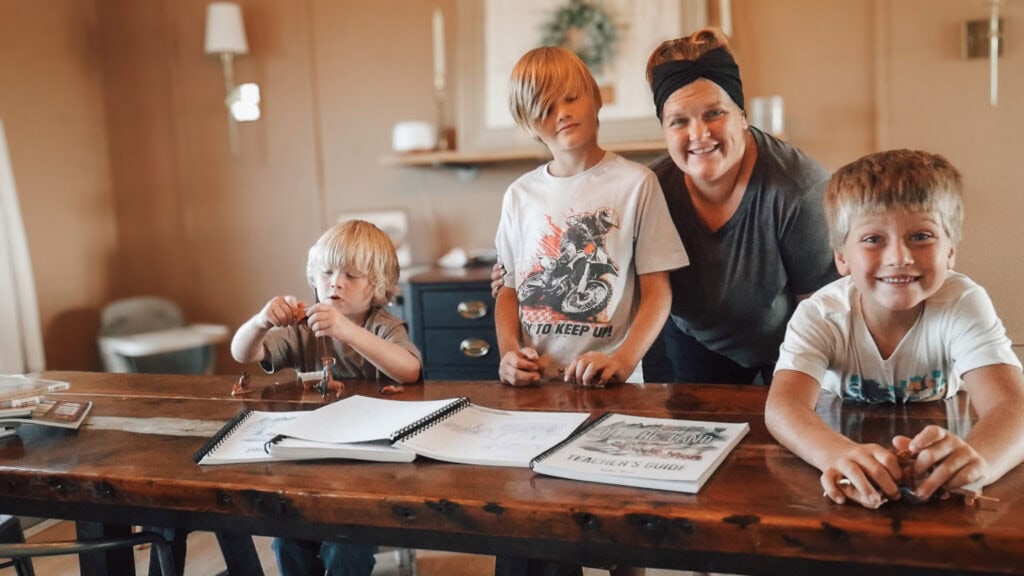
Gather Round has always worked well for our family because of the family-style approach. I can have children at different ages learning about the same topic, while each child works at a level appropriate for them. That makes a unit study especially enjoyable when the subject lends itself to hands-on activities.
And pioneer life is almost made for hands-on learning.
There is something fascinating about realizing that the things we take for granted today—going to the grocery store, turning on a light, getting in the car, buying clothes, or simply walking over to a thermostat—would have been completely foreign to pioneer families.
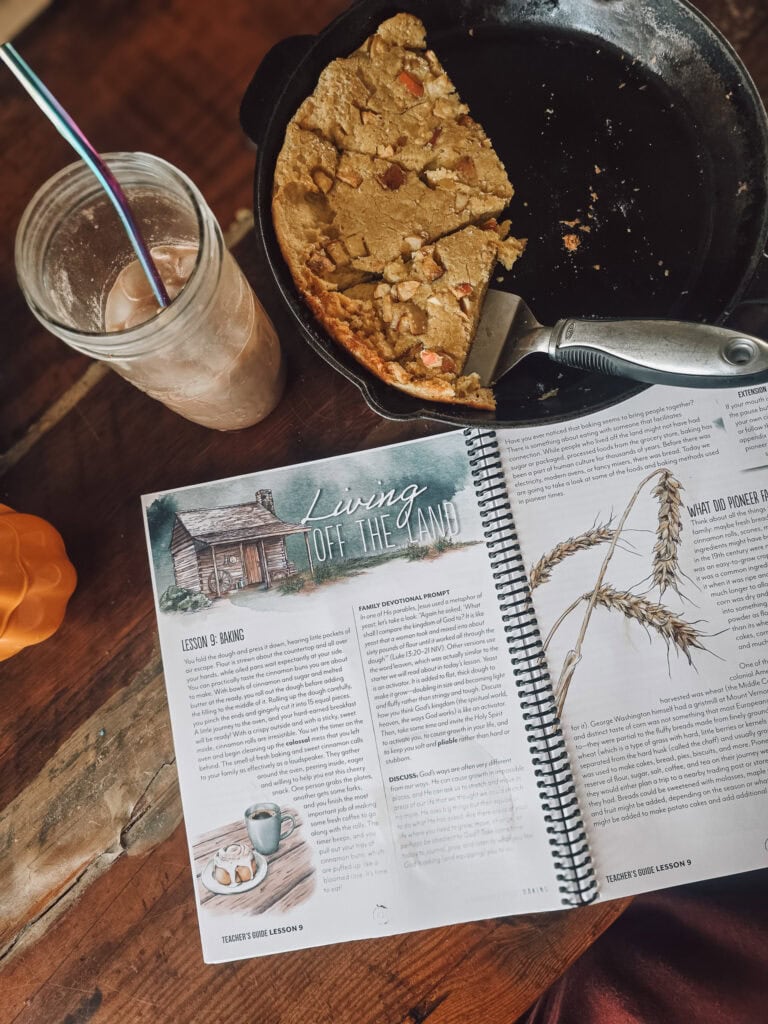
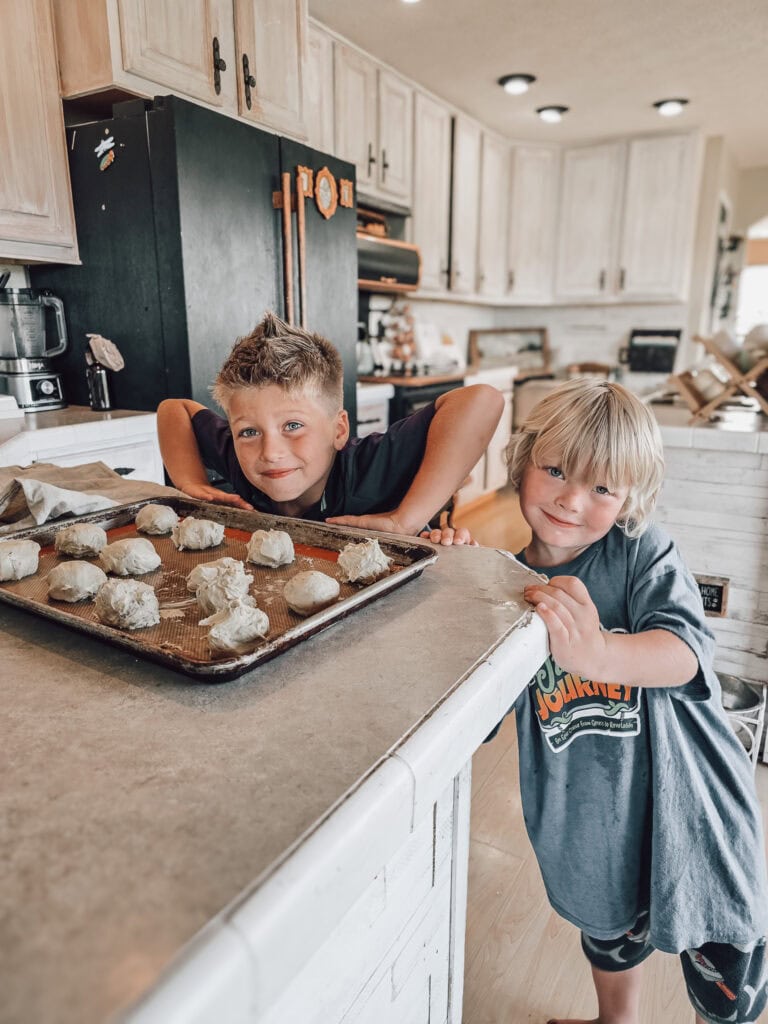
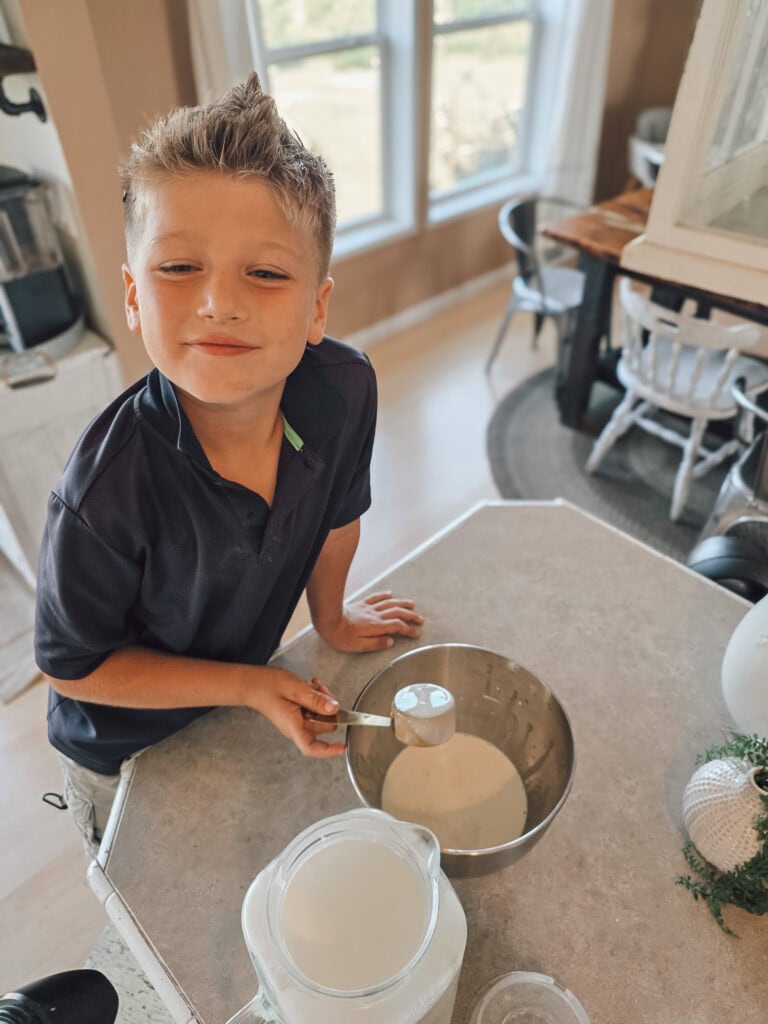
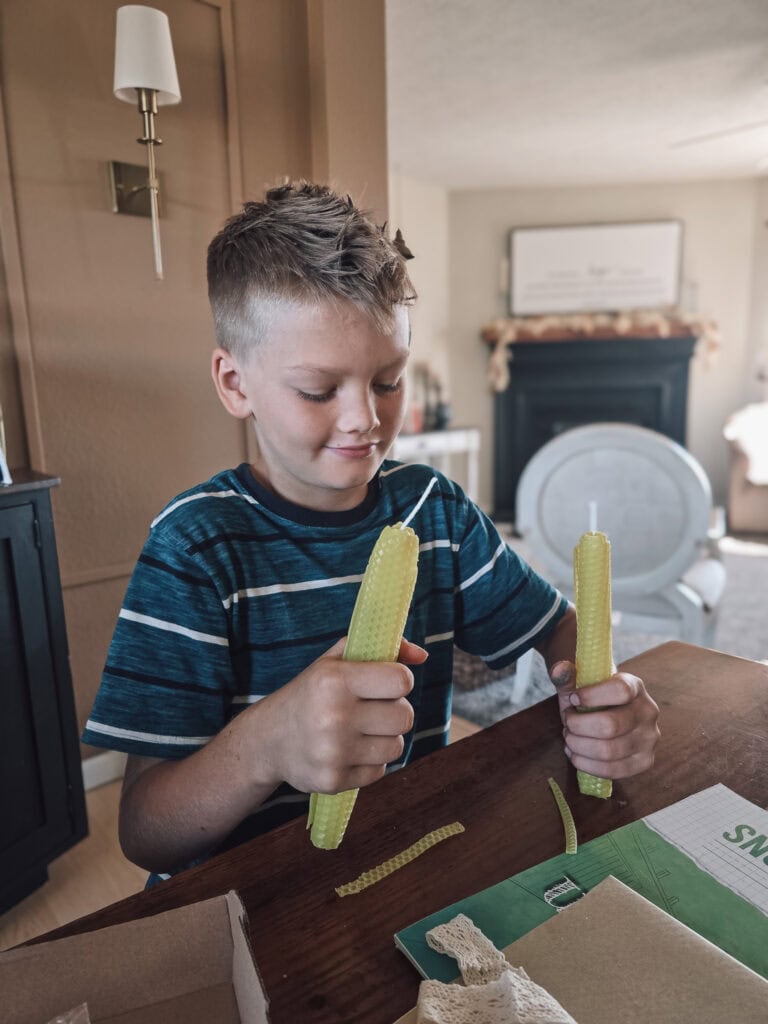
The unit gave us a wonderful way to talk about those differences and think about what daily life actually looked like. We gave the boys opportunities to make butter, sourdough, shoot a rifle, go on many field trips, pump water at a well, roll beeswax candles, and much more.
I also appreciated that there was enough variety to keep the learning interesting. There were opportunities for reading, writing, crafts, projects, and other activities, so it didn’t feel like we were simply reading about pioneer life from a textbook.
And because this is a family unit study, you can really make it work for different levels. Younger children can participate in the crafts and activities while older kids can dig a little deeper into the history, geography, writing, or additional books.
That flexibility is one of the reasons I continue to enjoy using Gather Round in our homeschool.
Extra Field Trips We Did
One of the things I love about homeschooling is that a unit study doesn’t have to stay at home.
Because we were studying pioneer life, we looked for opportunities to experience some of these ideas outside of our normal homeschool routine. Getting out into the real world helped make the subject feel much more tangible.
I think this is also where you can really make the unit your own. Depending on where you live, you might visit a historical village, a pioneer museum, a working farm, an old log cabin, or even a local site connected to early American history.
We added a few experiences of our own, and those ended up being some of the memorable parts of the unit. In our area, there are many field trips I could have come up with, but in our time frame and the distance we were willing to travel, here are the ones we took on:
There were so many fun experiences at these sites. We saw a Conestoga wagon, historical buildings, reenactments, pumped water, interacted with oxen, and much more. At the Oliver Kelley Farm, the boys pumped water and brought a bucket down to the fence line where the oxen were grazing, and the gentleman helping out at the site explained that it takes 30 of those buckets of water to water one ox! Such a hands-on experience for the boys!
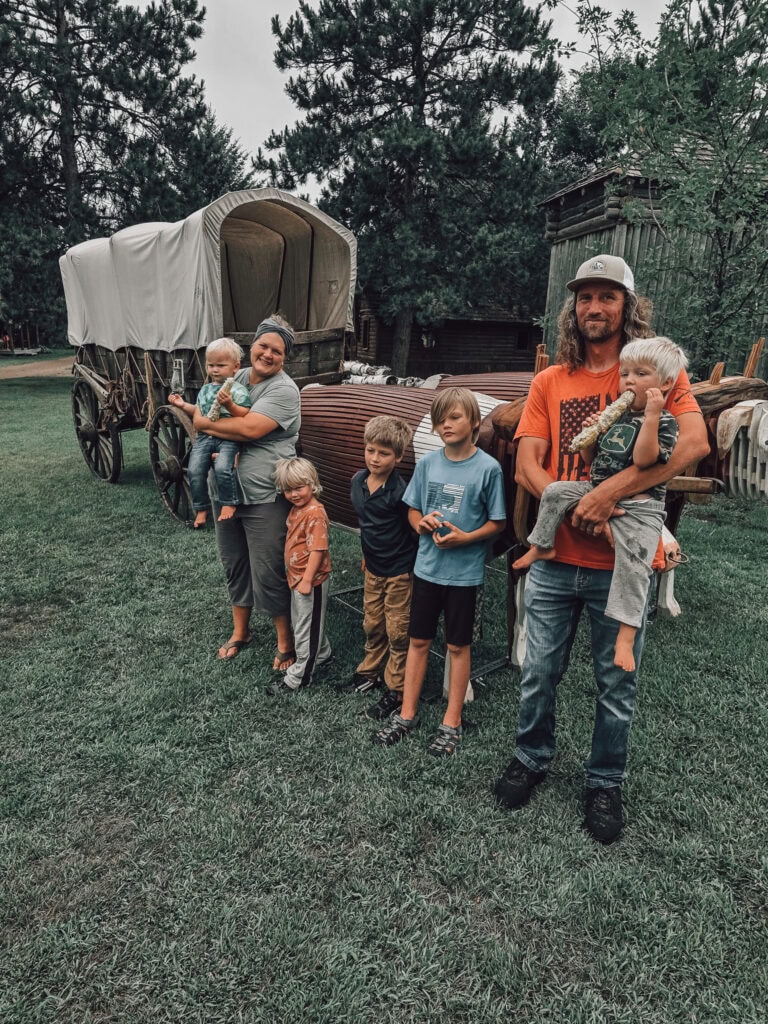
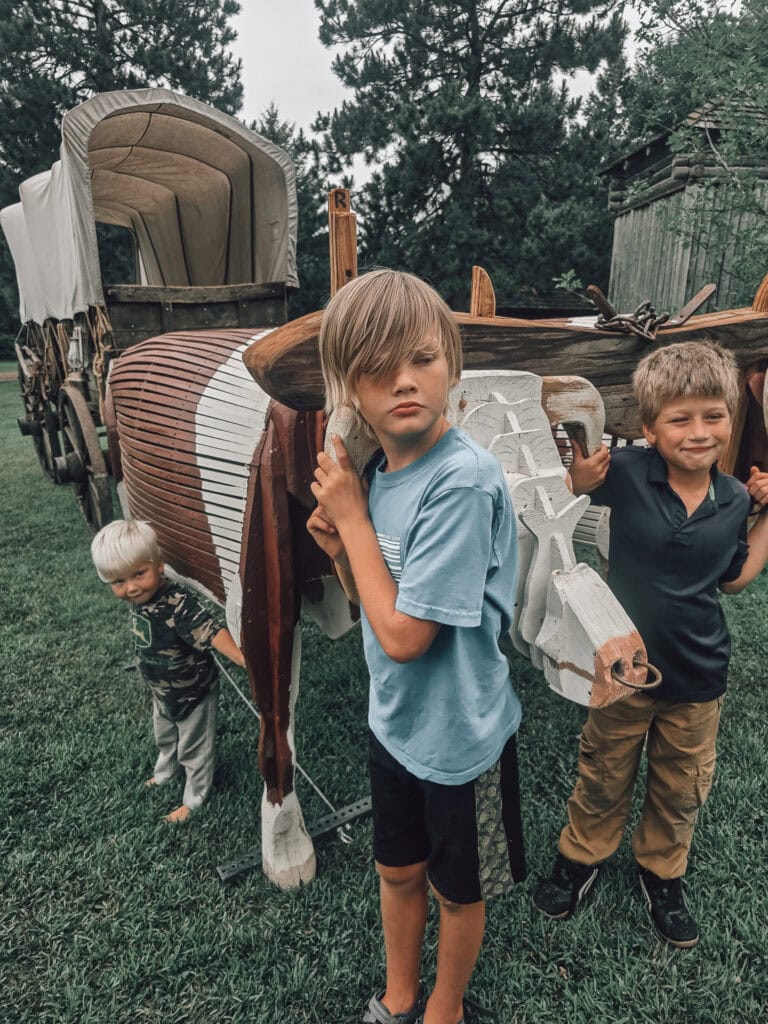
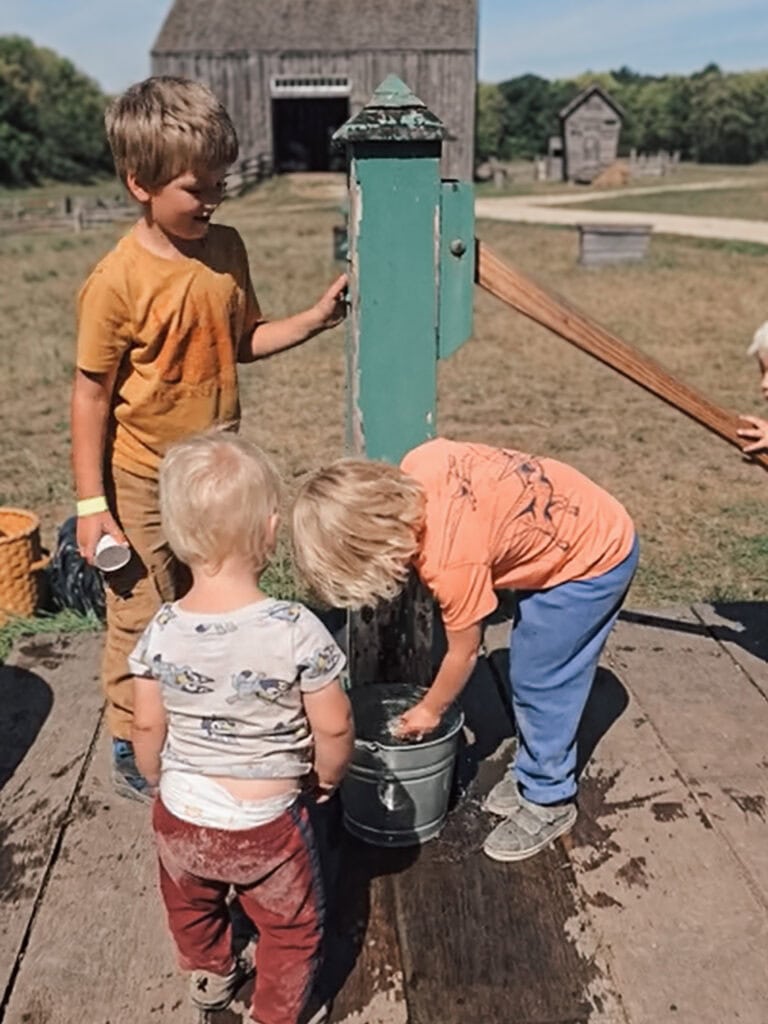
Creating a Pioneer Homestead Diorama
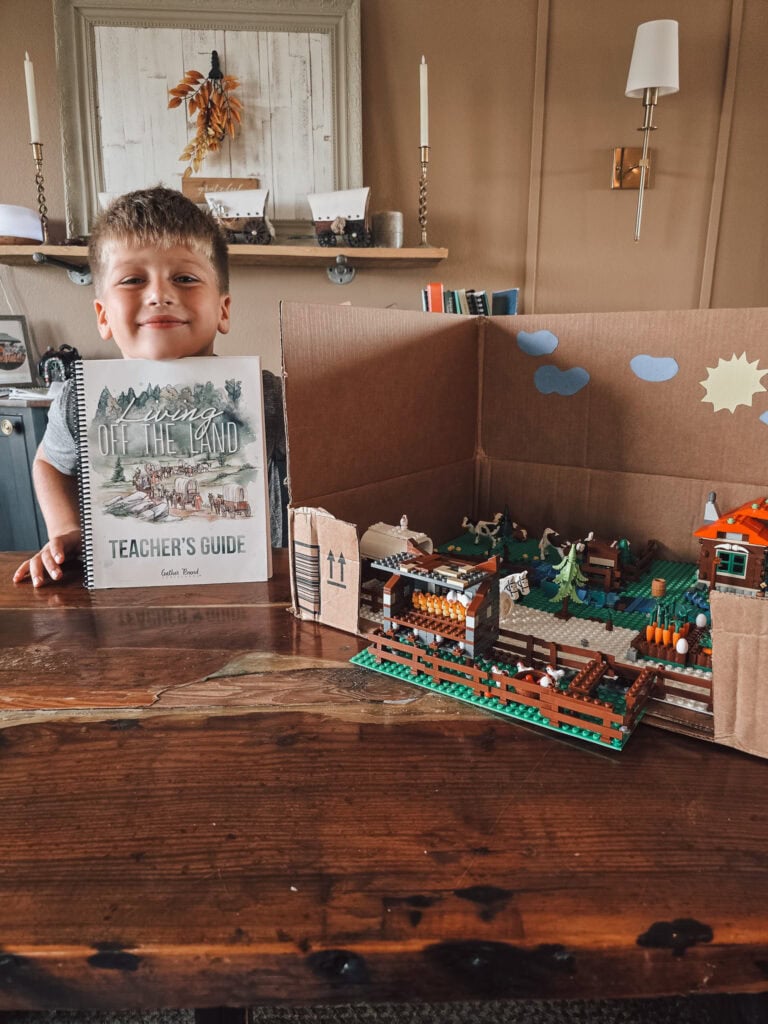
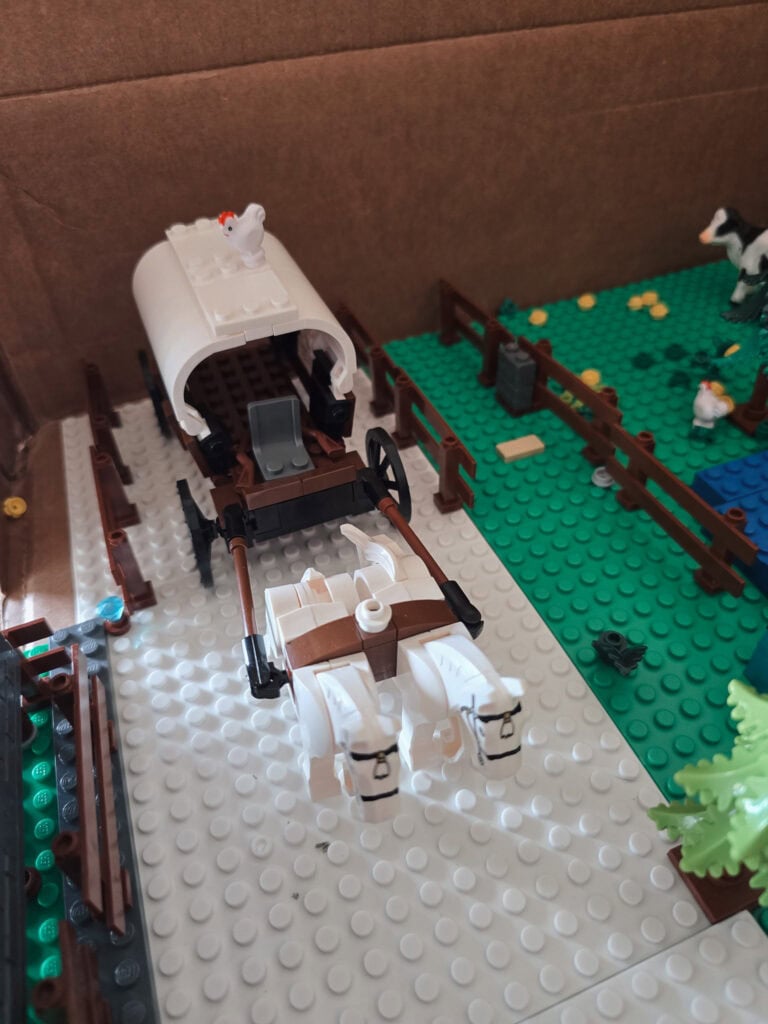
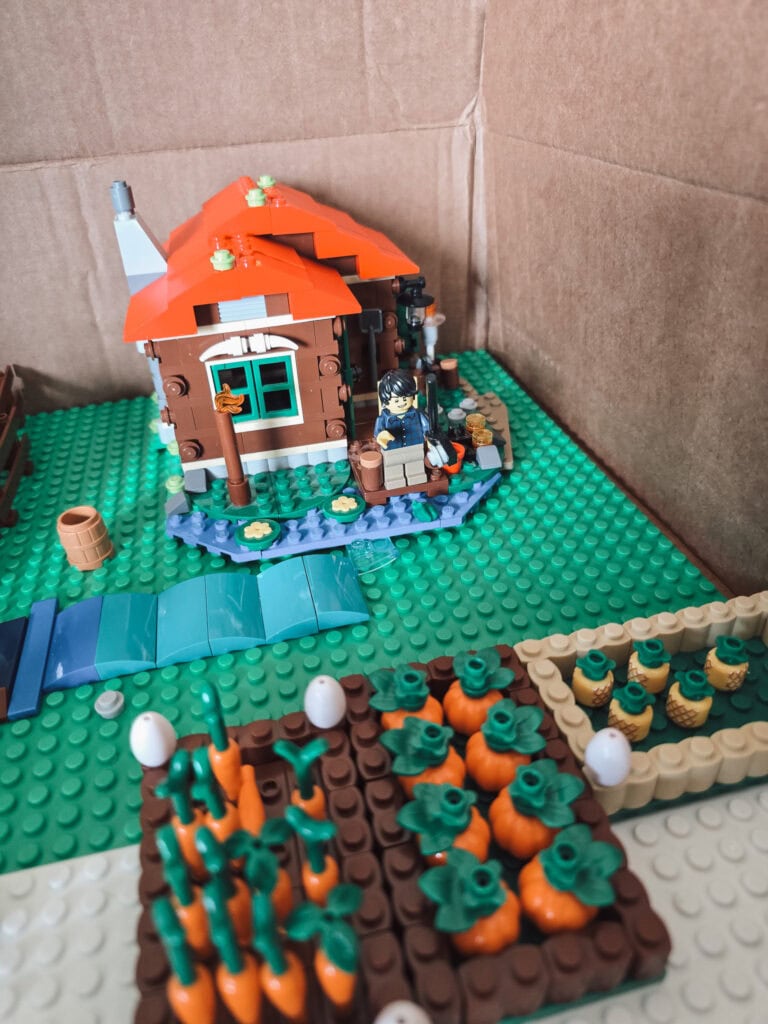
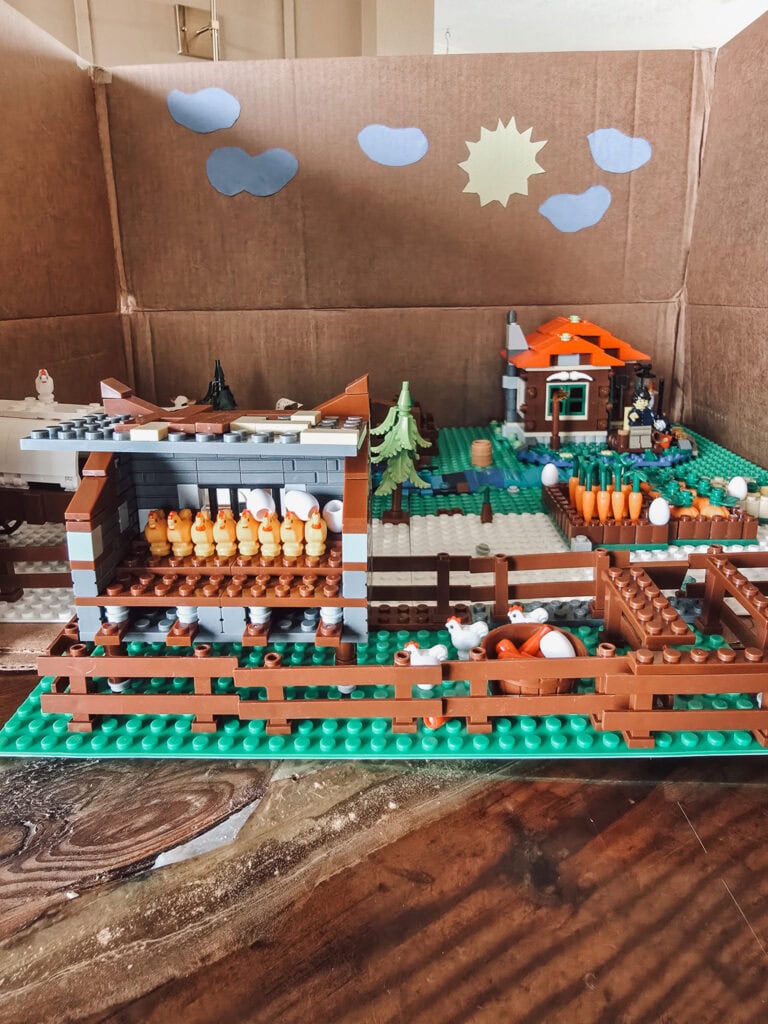
Now for my absolute favorite part of this entire unit: creating a pioneer homestead diorama out of Legos!
This was such a fun project because it gave the kids a chance to take everything they had been learning and turn it into something they could actually build.
We created a little pioneer homestead with the different elements you might expect to find around an actual pioneer homestead. Instead of simply talking about a log cabin, a garden, animals, and the other pieces of a homestead, the kids had to think about where everything would go and what a family would actually need.
This project actually started on the first day of our new unit study. I have a little tradition of giving the boys a “new unit study gift box,” and for Living Off the Land I found a Conestoga wagon set on Mercari. That little wagon launched what became one of my favorite parts of the unit: our pioneer homestead dioramas.
As we worked through the unit, I found or purchased little pieces that connected to what we were learning. When we talked about foraging and planting gardens, they got a garden element for their LEGO diorama. I even found an old-fashioned water pump on Mercari! Finding a pioneer-accurate cabin was a little more challenging, but I think what we ended up with for both dioramas was about as close as we could get. I loved watching the dioramas grow alongside our learning and seeing the boys turn what they were learning about pioneer life into something they could actually build and play with.
Note: This ended up being a more expensive project than I originally anticipated, but it was well worth the learning experience. The links below are not the ultimate price I paid for everything. I love Mercari and Facebook Marketplace for Lego ‘finds’. However, my Amazon affiliate links are below for ease of access.
- Lego House – Houses of the World
- Lego Lakeside Lodge
- Pioneer Wagon
- Fences
- Pine Trees
- Grasslands Lego Mat
- Gardens
- Chicken Coop #1
- Chicken Coop #2
I love a project that isn’t just something we make and then immediately put away. The diorama gave us a visual representation of pioneer life that we could continue talking about as we worked through the unit.
For me, this was probably the greatest stand-alone project we added to the study, and I would absolutely recommend doing something similar if you’re working through Living Off the Land.
Other Extras We Added
We also added quite a few other little activities and resources throughout the unit. Some were directly connected to the lessons, while others were simply things I thought would make our pioneer theme more fun.
We did some pioneer-inspired crafts, worked with things like beeswax candle rolling, and incorporated other hands-on projects that helped us imagine what life might have been like without modern conveniences.
We also used additional books and resources along the way. If you’re studying pioneer life with your children, this is a great opportunity to pull out some of those classic Little House books or other history books and picture books that help children imagine the life of a pioneer child.
Some of the books that I put into our book basket:
- Little House Picture Books – Sugar Snow
- Sarah Plain and Tall
- Little House Cookbook
- Quilt Block History by Mary Cobb
- Going West By Jean Van Leeuwen
- Apples to Oregon by Deborah Hopkinson – this was the boys’ favorite picture book this unit!
Note – Although I appreciate and love when you shop through my affiliate links, I have found that as a homeschool mom, ThriftBooks is my go-to for purchasing books. You can use this link to get your first book for free when you spend $30.
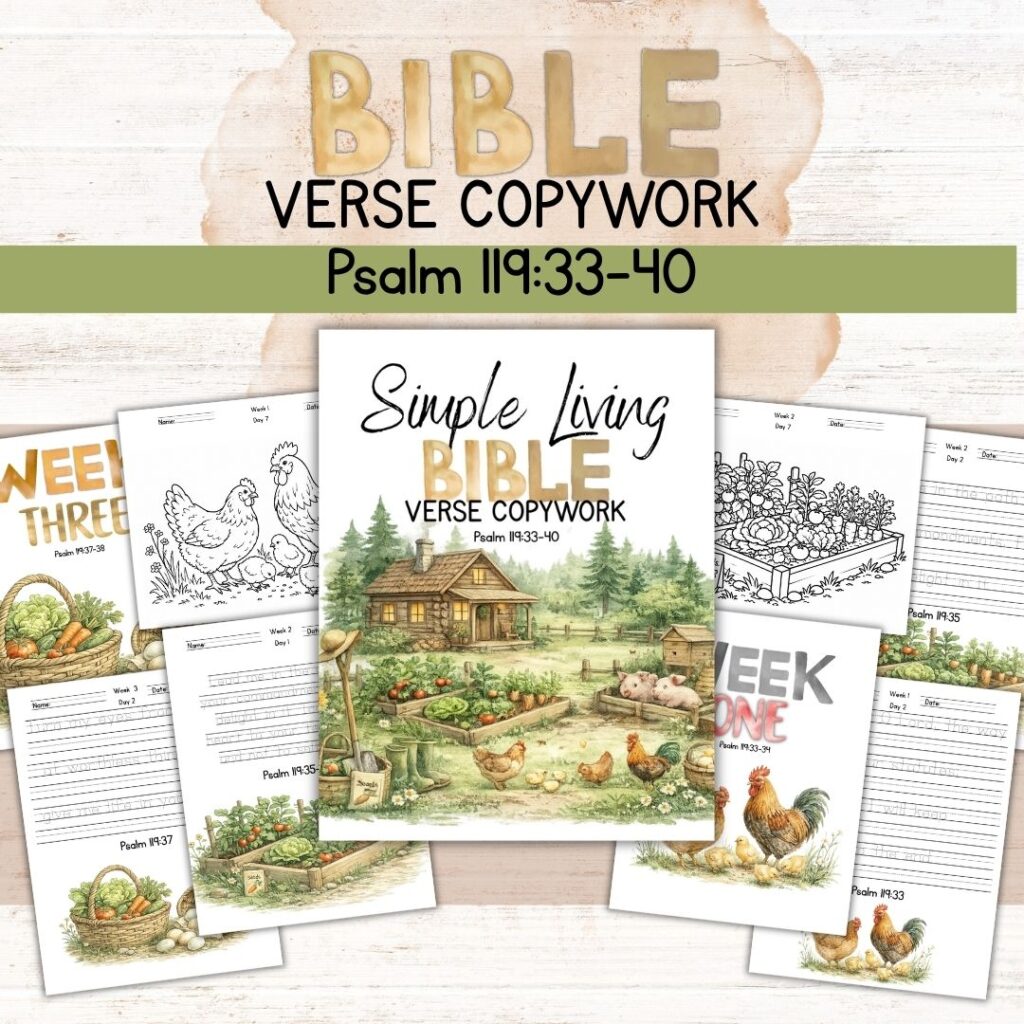
We also incorporated Bible verse copywork into our morning time each school day. I create these myself and they are themed for our unit studies.
There are so many ways you could expand this specific unit depending on your children’s ages and interests. You could add map work, read-alouds, audiobooks, crafts, cooking projects, pioneer games, or even more history if you want to turn it into a larger pioneer unit.
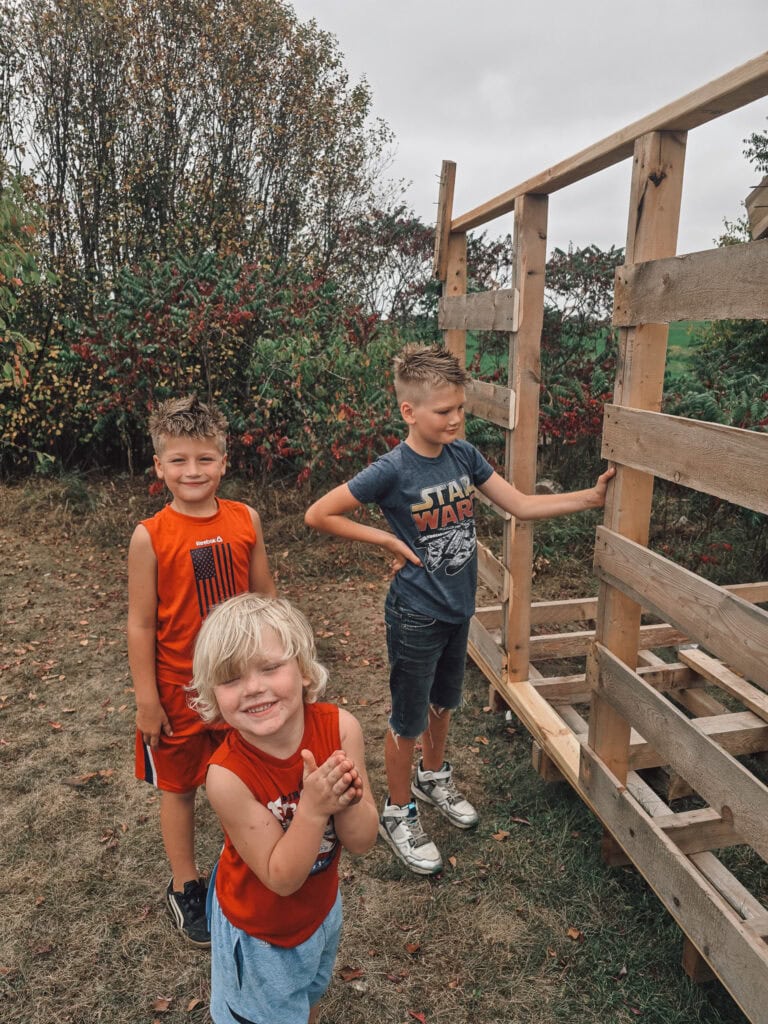
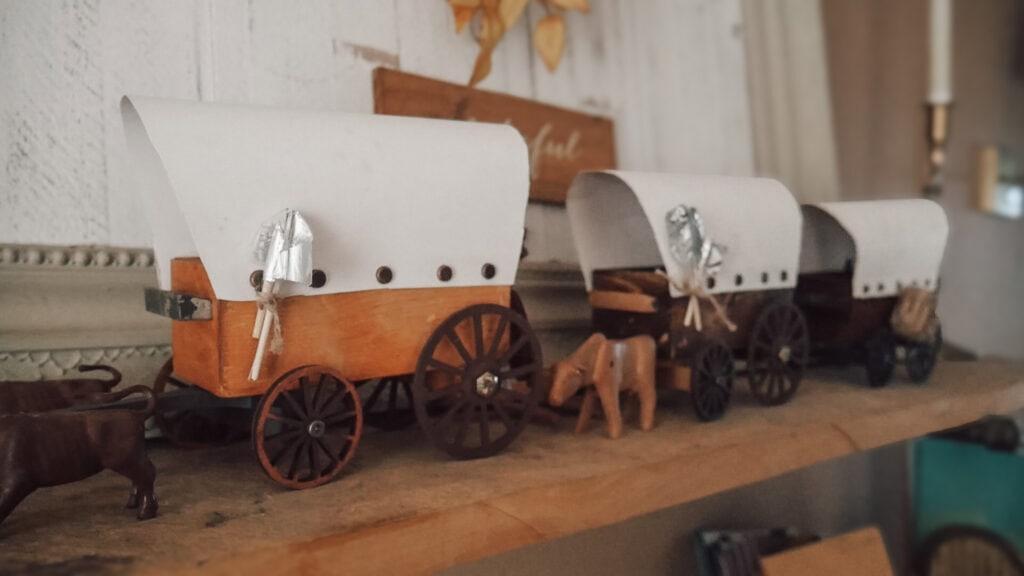
My parents also help us homeschool, and they also took on a couple of hands-on projects with the boys. The first was creating a pioneer wagon in my dad’s wood shop! There were very practical woodworking skills that they learned. Grandpa also decided to start a pallet fort for the boys on our property, which the older three boys have been helping with. Another huge project that won’t be finished by the time we finish up this unit, but is very applicable to the unit’s theme.
Conclusion: Another Exciting Unit Study
Overall, I really enjoyed our time with Gather Round’s Living Off the Land unit study.
I wouldn’t describe it as a comprehensive pioneer history curriculum. If you’re looking for that, I would plan to add some additional history books and resources, particularly if you have older kids who are ready to dig more deeply into westward expansion and early American history.
But if you’re looking for a pioneer-themed homeschool unit study that gives your children a chance to explore pioneer life through a variety of activities and projects, I think this is a wonderful option.
For our family, the hands-on aspect was one of the biggest highlights. The pioneer homestead diorama, the crafts, the field trips, and all of the little extras gave us a chance to move beyond simply reading about history and actually experience some of the ideas we were learning about.
And that’s one of my favorite things about homeschool unit studies in general. You can take a specific topic, gather your children around it, and turn it into something the whole family can enjoy.
Living Off the Land gave us another exciting Gather Round unit study to work through together, and I’m looking forward to sharing more of what we’re learning in our homeschool this year.
Don’t Forget to Pin for Later!