Start nature studies with confidence! Join our family’s first Charlotte Mason nature study and discover how simple homeschool science can be with a nature journal, curiosity, and time outdoors.
There is something a little funny—maybe even slightly embarrassing—about making a piece of content called Starting Nature Studies for the First Time when we live on 40 acres.
Because if you know our family, you know we are outside all the time. Plus, you may also know, if you watch the homeschool videos, that I like to call our style eclectic homeschoolers with an unschooling and Charlotte Mason bent.
The boys climb trees, wander trails, watch frogs, collect feathers, notice mushrooms, and somehow always come inside with pockets full of things that absolutely do not belong in pockets. If I’m being honest, our whole life already feels a little like nature study. To a certain extent, we do informal nature study.
And yet…we have never intentionally done a true Charlotte Mason nature study.
I have wanted to for the longest time. Truly. I’ve admired the beautiful nature notebooks, the watercolor sketches, the peaceful image of children quietly observing oak trees while a mother sips coffee nearby (tell me I’m not the only one who romanticizes it a little).
But I think I got stuck in my own head.
Somewhere along the way, I convinced myself that if I didn’t fully understand Charlotte Mason nature study, then I couldn’t do it well. I needed to know the “right way.” I needed the perfect system, the right nature journal, a field guide, maybe a magnifying glass, and enough knowledge to sound halfway intelligent when my kids asked questions.
But this summer, I decided we were just going to begin. Messy. Imperfect. Unsure. And honestly? I think that might actually be the best first step.
We school year-round, but May, June, and July flow in a different routine. We do reading and math 2-3 times a week, try new curricula we are not sure about, do Bible studies, and get outside more. I had this idea in the back of my head that I wanted to do nature studies this summer but never got it on our official plan. I was listening to The New Mason Jar podcast and Coffee with Carrie podcast, and both had great episodes on nature study, which gave me the push to intentionally do an official nature study.
Welcome to Healing Home. I hope you are encouraged and inspired by your time here.
This page may contain affiliate links. To view my full affiliate link disclosure, click here. There are Amazon affiliate links in this post. As an Amazon Associate, I make a small commission from Amazon links in this post. Find our privacy policy, terms of service, and more information about user data by visiting the links above.
Fast links from the YouTube video:
What Is Charlotte Mason Nature Study?
If you’re unfamiliar with Charlotte Mason nature study, don’t worry—you are in good company because I’m learning too.
At its heart, nature study is really simple. It’s slowing down long enough to observe the natural world closely.
That’s it.
“Our aim is to get them to know and delight in natural objects as in the familiar faces of friends” — Charlotte Mason
In the Charlotte Mason philosophy, children spend direct time outside observing God’s creation. They notice animal life, weather patterns, plants, birds, bugs, flowers, and all the tiny things we usually rush past. Instead of a textbook-heavy homeschool science approach, nature becomes the science curriculum.
Children observe. They ask questions. They draw what they see in a nature notebook. They learn to love investigation.
I love the heart behind nature study, especially in a world where everything feels rushed.
Nature study feels like permission to pause. To notice. To wonder. To sit beside your child and say, “I don’t know either. Let’s figure it out.”
Making Things Harder Than They Need to Be
I think sometimes as moms—especially homeschooling moms—we can accidentally make things harder than they need to be. We think we need expertise before action.
But what if we just started instead? What if nature studies weren’t about doing it perfectly but about building observation skills together?
Because the good news is that nature study seems to be less about scientific instruction and more about teaching our children the power of observation and the wonder of God’s creation.
Truthful observations. Wonder. Connection. A love of God’s creation. And suddenly that feels a whole lot less intimidating.
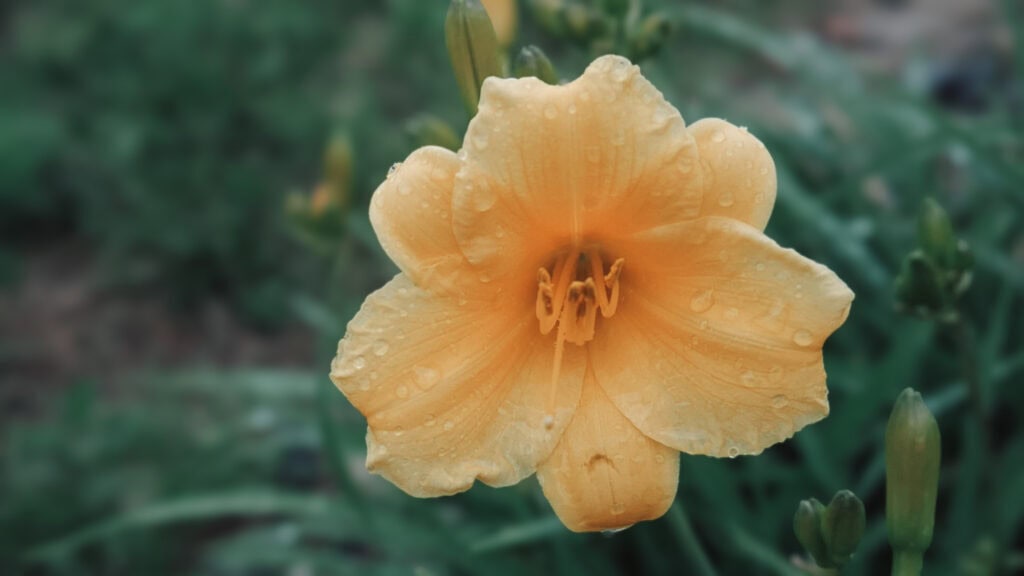
The 5 Parts of a Charlotte Mason Nature Study
“We were all meant to be naturalists, each in his degree, and it is inexcusable to live in a world so full of the marvels of plant and animal life and to care for none of these things.” — Charlotte Mason Volume 1: Home Education
But Charlotte Mason’s words remind me that nature study is not really about expertise.
It is about attention. It is learning to care about the world God created. It is slowing down enough to notice.
Here are the 5 basic parts of a Charlotte Mason-style nature study (at least the way we’re approaching it as complete beginners).
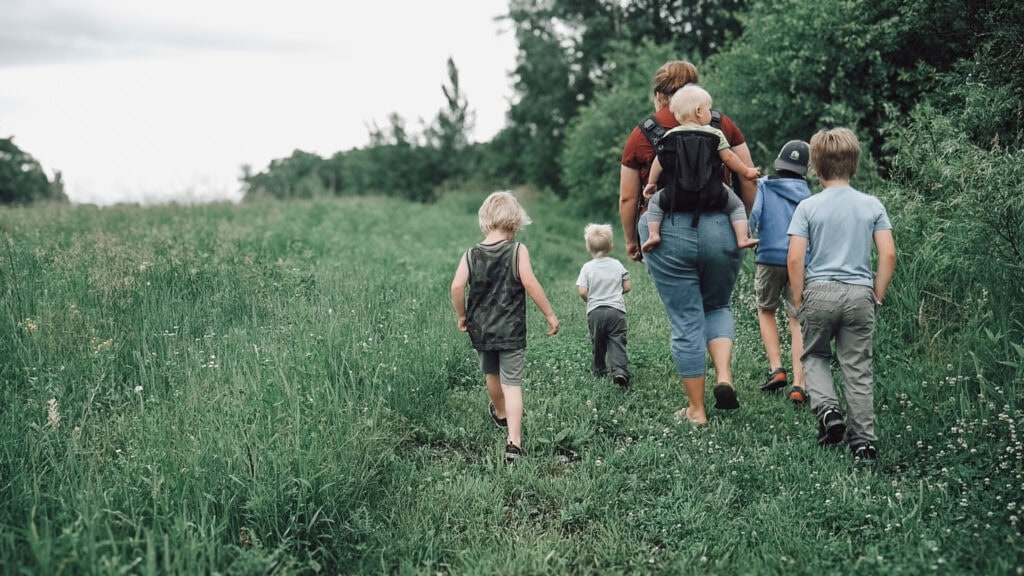
1. Go Outside and Observe
The first step is simply going outside. That’s it. No elaborate science curriculum. No perfect plan. Just direct contact with the natural world.
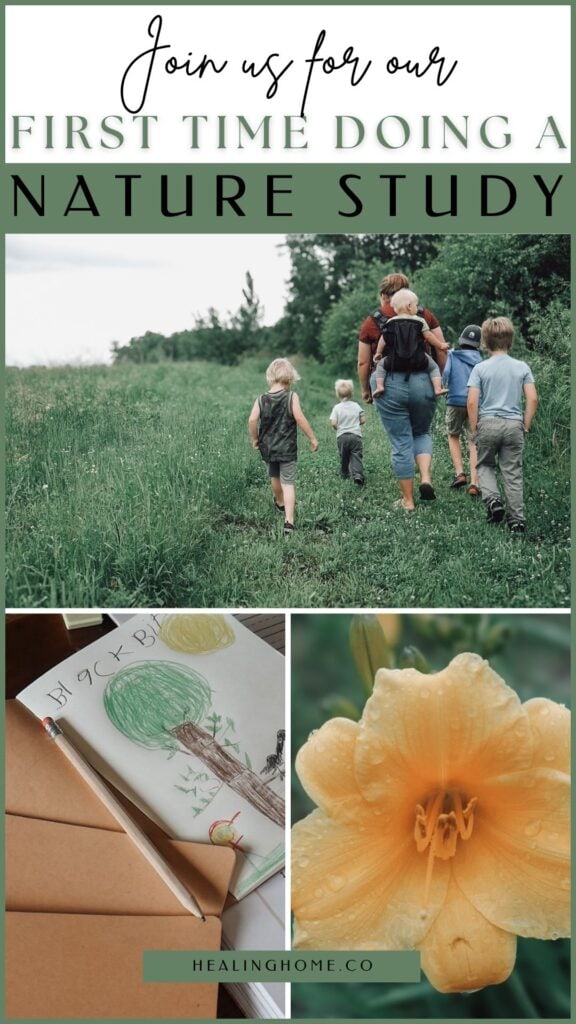
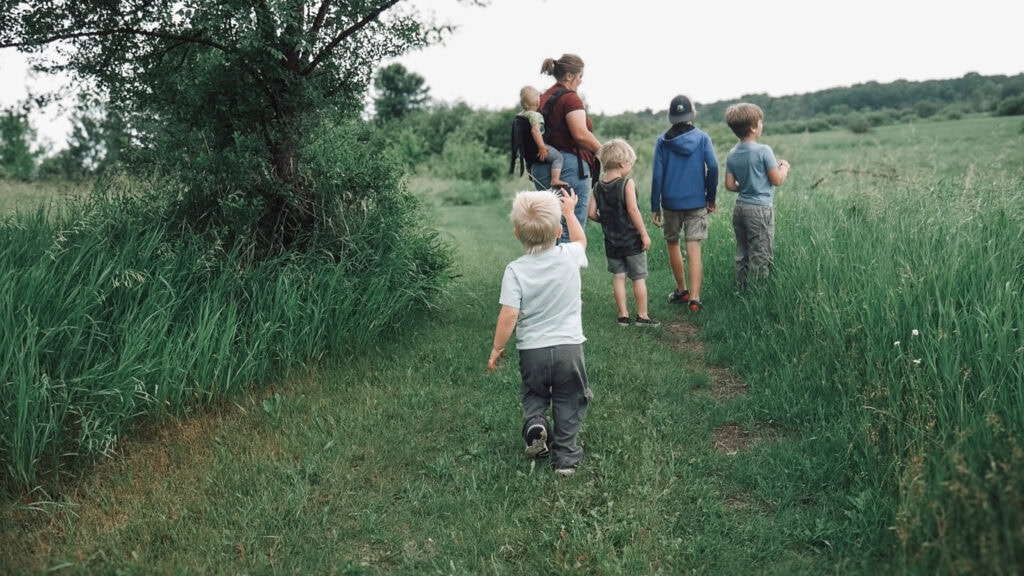
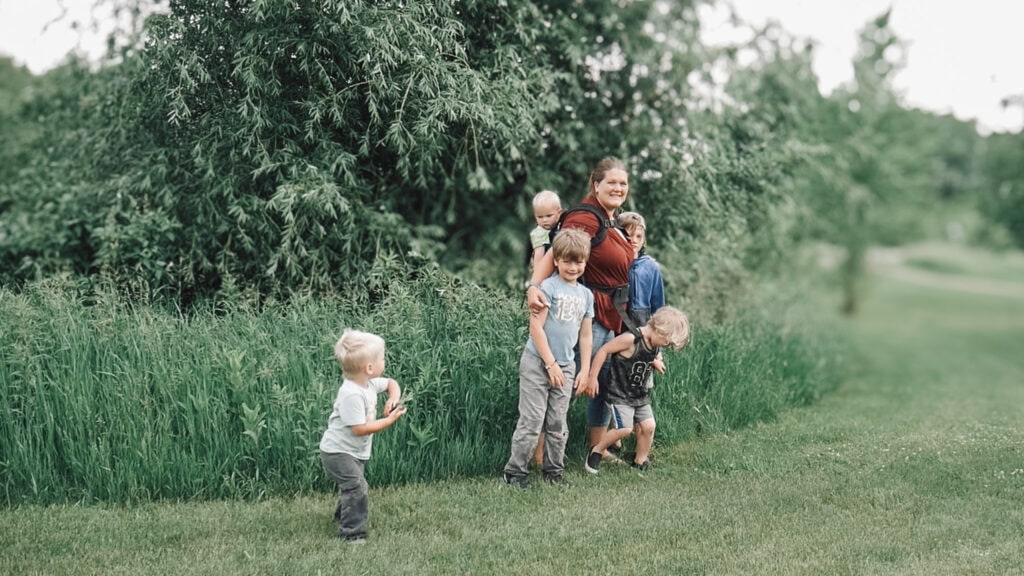
For our first nature study, we simply head outside and do our little quarter-mile loop around the property. Nothing fancy. No big plan. We just walked and talked about what we saw. It was a rainy day, so I had to plan the stroll in the rain breaks, but nobody seemed to mind.
We walked our loop, spent some time on the edge of the swamp area noticing the cattails. Someone noticed a bird overhead. The boys point out tracks in the dirt, mushrooms growing in the rain, and wildflowers we normally pass right by. We talk about how things look different than they did a few weeks ago and notice the changing weather patterns as summer settles in.
And honestly? It feels so much simpler than I imagined. But truly, this can happen anywhere.
A local park. A state park. A neighborhood walk. Your backyard.
Even a tiny patch of wildflowers growing beside a sidewalk.
The point is not where you go. The point is learning the power of observation.
2. Notice One Thing
One thing I appreciate about nature study is that it doesn’t have to feel overwhelming. You do not have to study everything.
Just notice one thing. Maybe it’s a brown bird your child spots in the trees. Maybe it’s wildflowers.
A feather. A bug. Tree bark. Cloud patterns. A mushroom after a rainstorm.
I told the boys that they had to come back from our walk with one thing that they thought was interesting and they wanted to learn more about.
Nature study grows observation skills by teaching children (and honestly, moms too) to stop rushing past the details.
3. Keep a Nature Journal
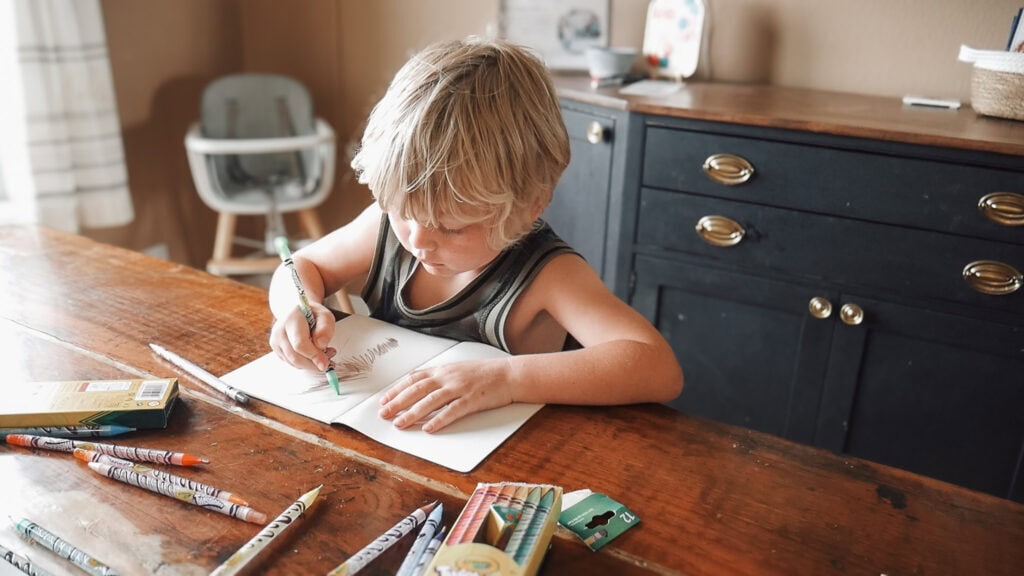
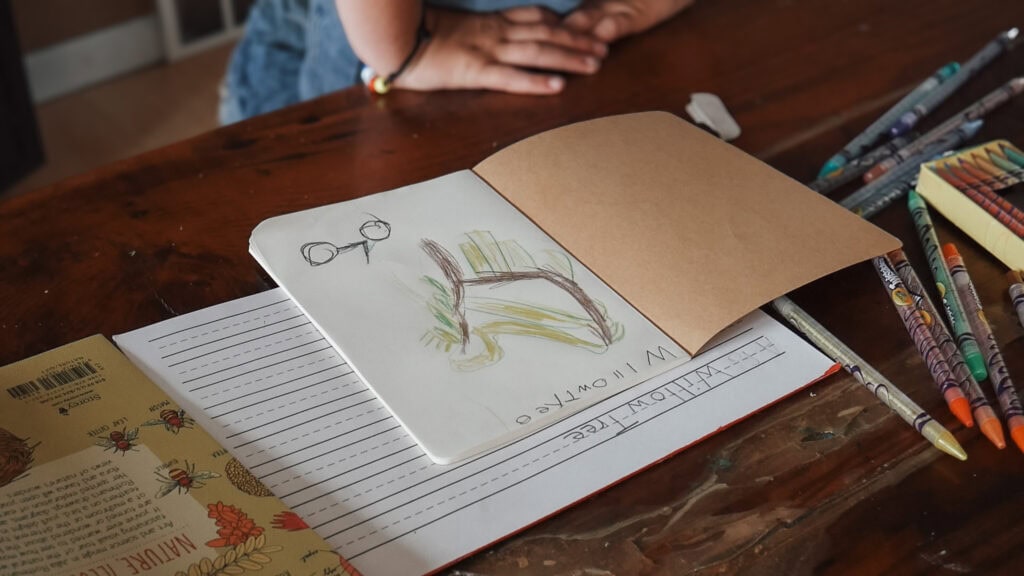
This is the part that always intimidated me because I pictured these absolutely beautiful illustrations in a perfect nature notebook.
Meanwhile, I have five boys who, although they enjoy art, are not going to be sitting for long lengths of time to sketch out anything.
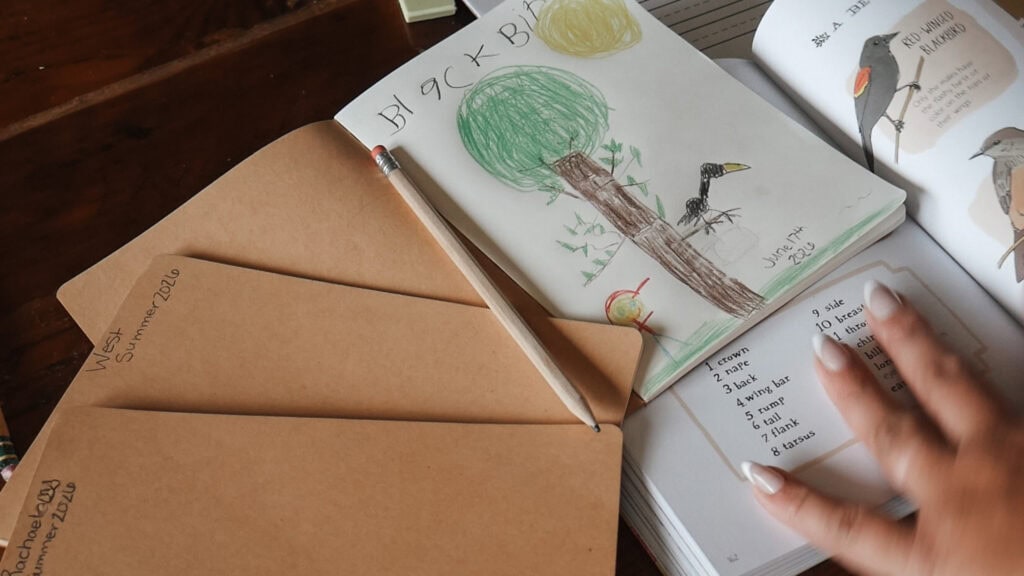
So we’re keeping expectations realistic. The goal of a nature journal is not perfection. It is truthful observations.
A quick sketch. A few words. The name of what you found. Maybe a date and location.
Older students can add more details, scientific names, labels, or observations over time, while younger children can simply draw what interested them.
One thing that helped me was finding the right notebook for nature journaling. That sounds so silly, but I was all up in my head space that it had to be something clunky, large, and aesthetically beautiful. Instead, I finally realized it could just be small kraft notebooks that didn’t cost too much and were completely adequate!
I did grab some twistable colored pencils because they felt simple and fun, but truly you can start with whatever you already have.
4. Investigate Together
This is where the learning naturally unfolds.
After observing something, you can come home and investigate. Pull out a field guide. Read a nature book. Google together. Use apps like ‘Picture This‘ to help you identify what you are looking at.
Look through a good book filled with beautiful illustrations. We have lots of good nature books in our house, but I specifically bought the Nature Anatomy by Julia Rothman and The Handbook of Nature Study by Anna Botsford Comstock.
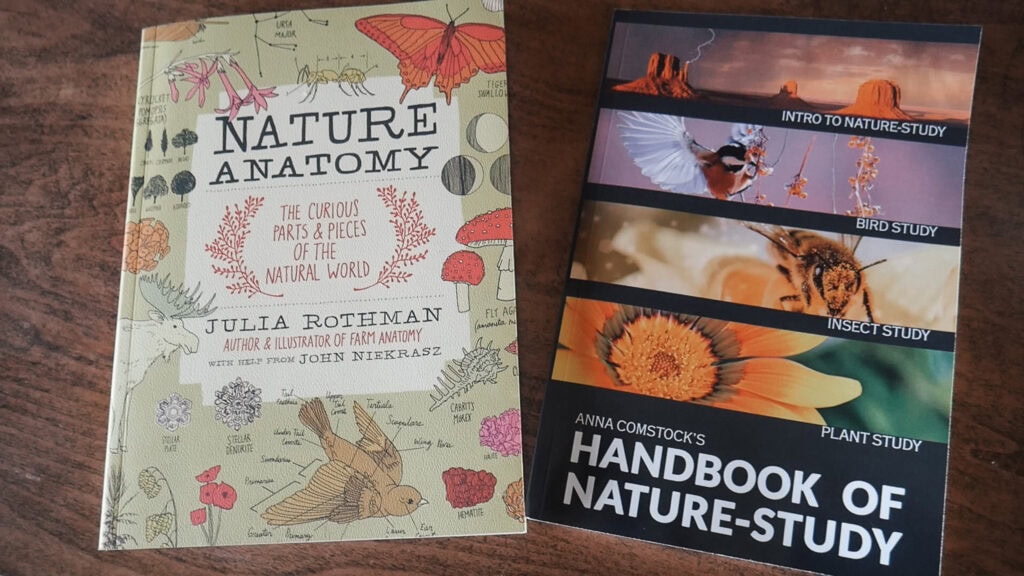
You do not have to know all the answers beforehand. Another great resource that I’ve loved is Nat Theo podcast. Since our first nature study day was rainy, I pulled up her video on thunderstorms (ep 95), which was a great way to add some science to the entire experience!
Honestly, I think there is something sweet about saying, “I’m not sure—let’s learn together.”
5. Build Wonder Over Time
I think this may actually be the heart of nature study. Not checking off science lessons. Not mastering scientific instruction.
Not perfectly identifying every native species.
But building a connection with God’s creation over time. The wonder of creation. The habit of noticing. The love of investigation.
And maybe—without even realizing it—we begin seeing the natural world with fresh eyes too.
If You’ve Been Waiting to Start…
Maybe this is your sign.
If you’ve wanted to try nature studies but keep feeling like you don’t know enough, this is me gently telling you to start anyway. You don’t have to understand everything before beginning.
You don’t need the perfect homeschool science plan, a beautiful nature notebook, or all the answers. You just need a little unstructured time, some curiosity, and a willingness to notice the natural world around you.
As for us, I don’t know exactly what nature study will look like in our home long term. Maybe it becomes a weekly rhythm during the school year. Maybe it turns into our Friday Fun Days – we don’t actually do those, but a girl can dream! Maybe it simply becomes another way we slow down, build observation skills, and enjoy the wonder of creation together.
I’m done waiting until I feel fully ready. If you’ve been waiting too, consider this your encouragement to take that first step. Grab a nature journal, head outside, and start noticing. We can learn as we go—together, and imperfectly.
I also want to invite you to visit the accompanying transcript blog post with all the resources mentioned in this video. It’s laid out in an easy format for you. Consider also signing up for our newsletter that goes out once a week with homemaking encouragement and inspiration.
Don’t Forget to Pin for Later!