When I first heard about The Inspired Homeschool by Jennifer Pepito, I was immediately interested. Over the past year, I’ve begun getting acquainted with Jennifer Pepito’s work through her Restoration Home Podcast and her appearances on Coffee with Carrie, both podcasts I really enjoy. I was immediately drawn to her love for homeschooling and the peaceful, intentional philosophy she brings to raising and educating children. As I listened, I found myself nodding along with so much of what she shared, so when I heard about The Inspired Homeschool book that was coming out, I was excited to dive in.
As a homeschool mom myself, I’m always looking for books that don’t simply defend homeschooling but instead inspire me to cultivate a richer family culture—one centered on faith, curiosity, and a lifelong love of learning. Jennifer’s heart for home education made me eager to read what she had to say, and I was thrilled to receive this book from Harvest House Publishers for review.
I was thrilled to receive this book from Harvest House Publishers for review, and after reading it, I can honestly say it is a book well worth the read, whether you are a homeschool mom or not.
This page may contain affiliate links. To view my full affiliate link disclosure, click here. There are Amazon affiliate links in this post. As an Amazon Associate, I make a small commission from Amazon links in this post. Find our privacy policy, terms of service, and more information about user data by visiting the links above.
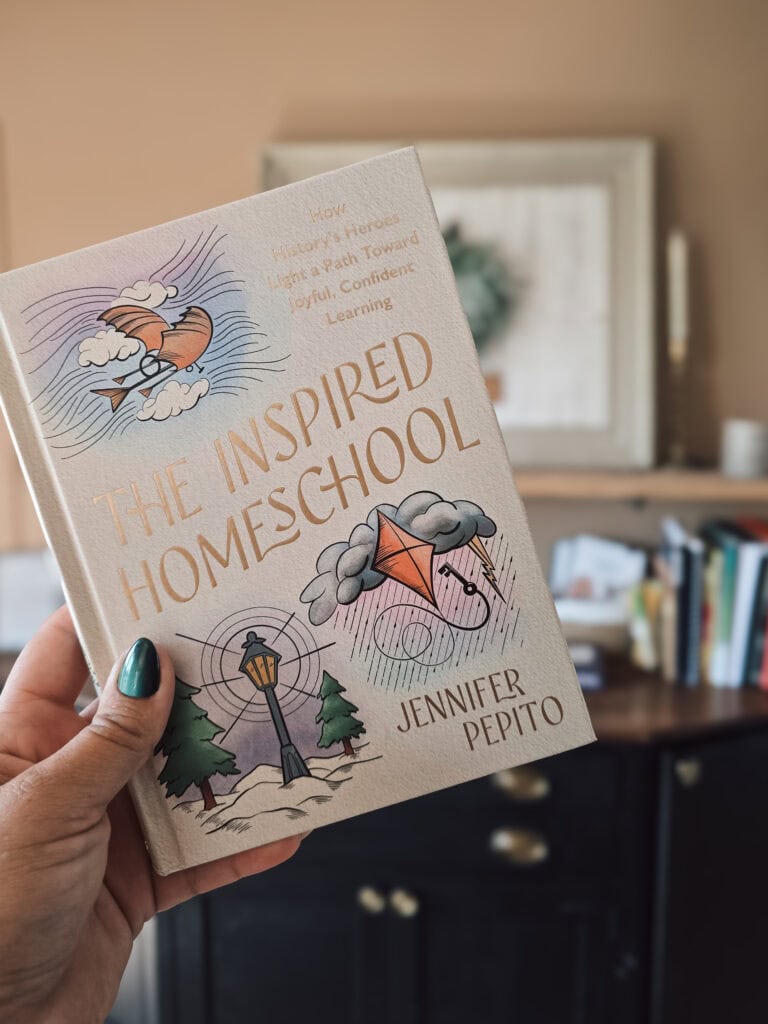
A Hopeful Vision for Home Education – The Inspired Homeschool
One of the things that immediately stood out to me about Jennifer Pepito’s The Inspired Homeschool is that it isn’t written from a place of fear.
Many books discussing the current state of public schools spend much of their time highlighting everything that’s wrong with modern education. While Jennifer certainly acknowledges the deep concerns many Christian parents and homeschool parents have regarding today’s educational landscape, she doesn’t dwell there.
Instead, she offers a hopeful vision.
Rather than asking readers to homeschool because it’s the only option, she invites us to reimagine home education altogether. She paints a picture of learning that extends far beyond worksheets and test scores—a holistic vision of education rooted in family life, character formation, wonder, faith, and meaningful relationships.
Throughout the book, Jennifer reminds readers that for much of history, educating children at home was the longstanding practice, not the exception. The rise of institutional schools is relatively recent, and while many families choose traditional public school, she gently encourages readers to consider whether there may be a better way for their own family.
That perspective felt incredibly refreshing.
Purchase a copy!
History’s Greatest Homeschooled Minds
Perhaps the most unique aspect of this book is Jennifer’s use of historical narratives of several homeschooled greats.
Instead of simply explaining the benefits of home education, she lets history tell the story.
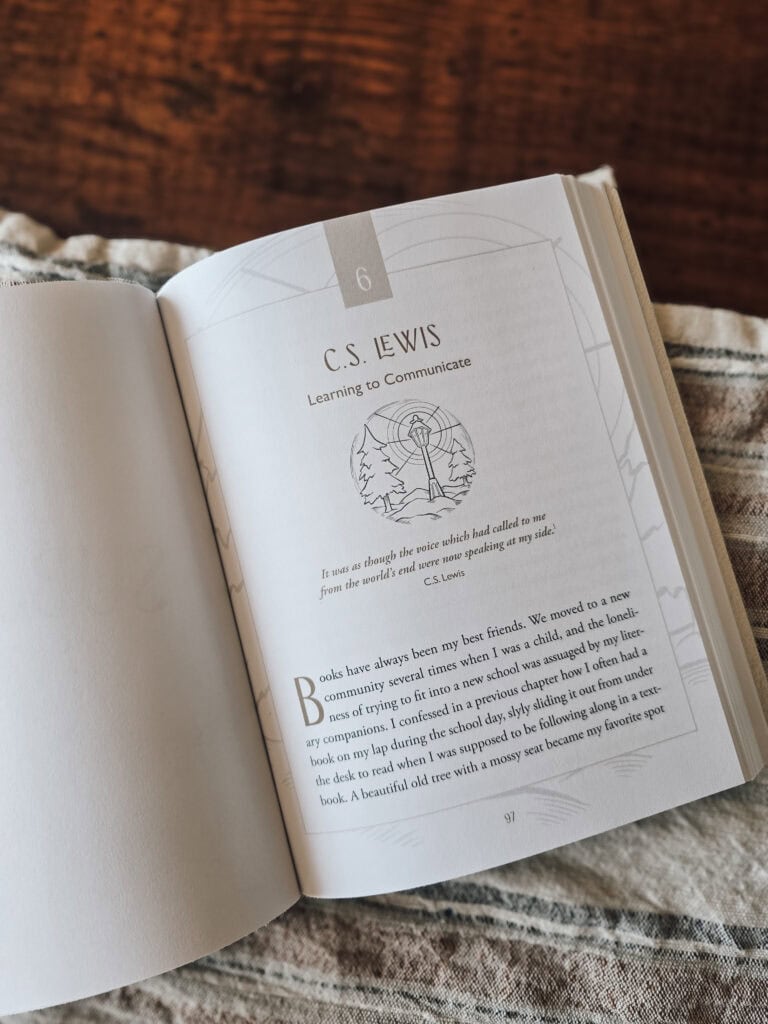
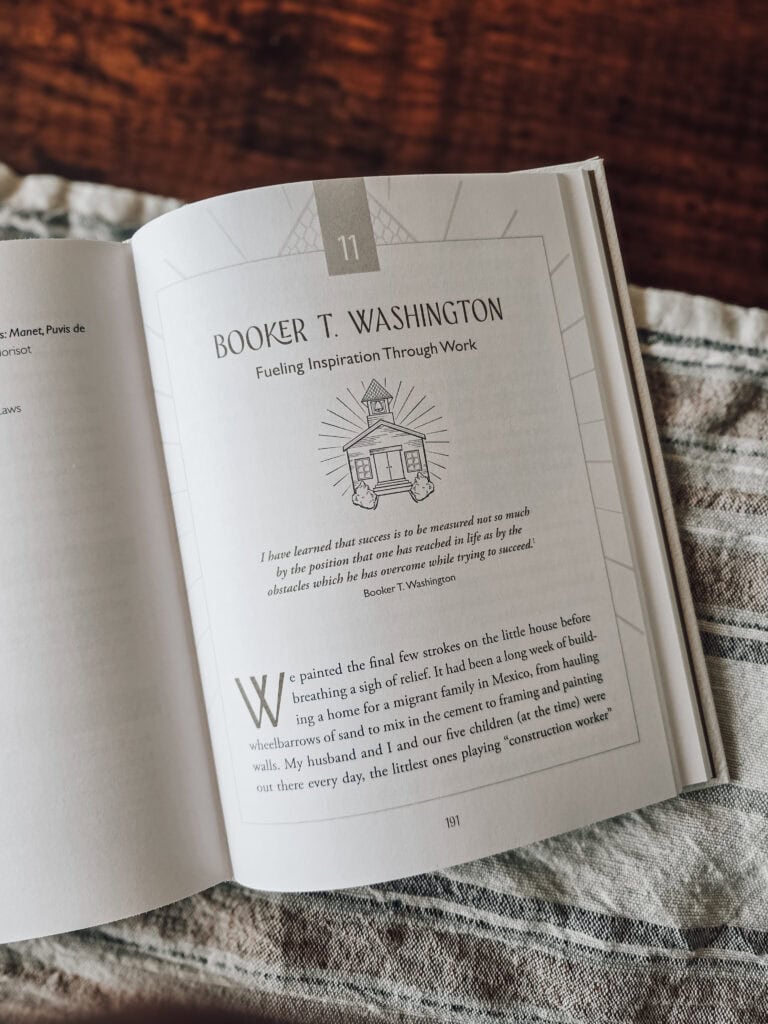
Readers meet remarkable home-educated figures like Leonardo da Vinci, Blaise Pascal, Benjamin Franklin, Charles Dickens, Booker T. Washington, C.S. Lewis, and many others whose lives demonstrate the remarkable possibilities of homeschooling. These aren’t presented as unreachable geniuses, but as powerful examples of what can happen when curiosity is nurtured, character is cultivated, and learning becomes part of everyday life.
Jennifer weaves together thoughtful research, historical biography, educational philosophy, and biblical insights in a way that never feels overwhelming. Instead, each chapter naturally points readers toward the larger truth that education is about far more than academics—it’s about helping our children become people of wisdom, creativity, and faith.
I especially appreciated that the book doesn’t suggest homeschooling somehow guarantees exceptional children. Rather, Jennifer draws attention to the environment these historical heroes experienced: homes filled with good books, meaningful conversations, practical work, and parents who intentionally invested in their children’s hearts and minds, which of course truly fed my ‘Charlotte Mason’ heart.
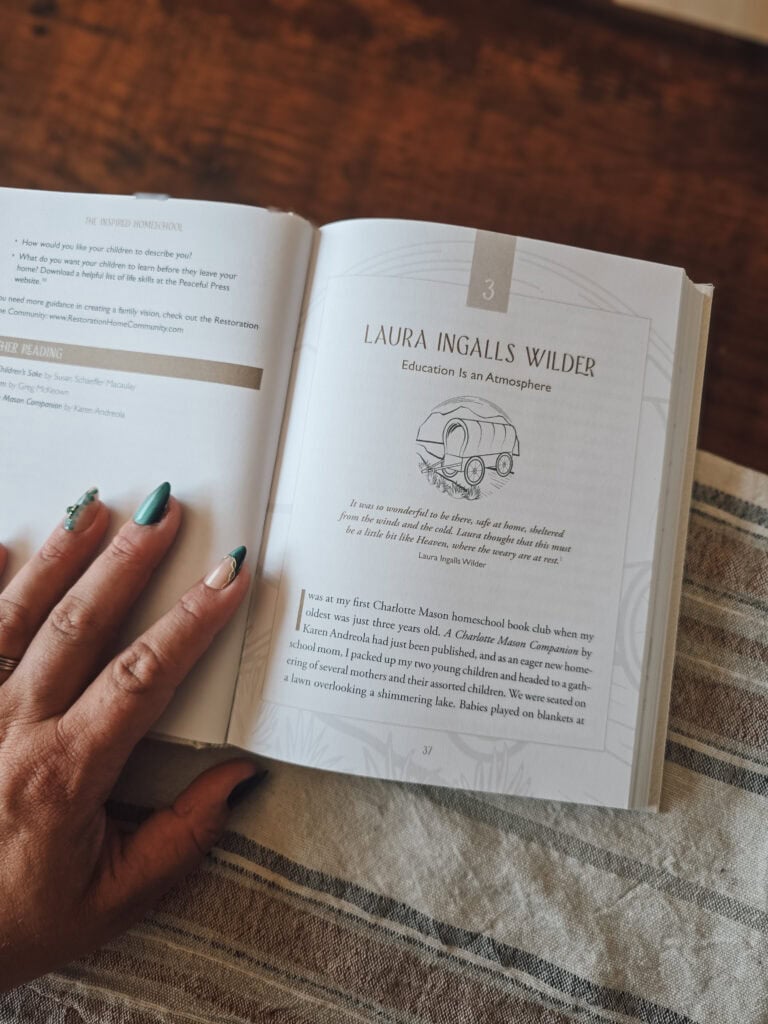
My Favorite Chapter: Laura Ingalls Wilder
Without question, my favorite chapter was the one on Laura Ingalls Wilder. As someone who has loved the Little House books since childhood, I found myself slowing down to savor every page. Jennifer’s storytelling really shines here.
Rather than simply recounting Laura’s life, she explores how Laura’s simple childhood experiences, close-knit family relationships, hard work, and love of learning shaped the woman she eventually became. This chapter emphasized practical life skills and chores in the lives of children.
It reminded me that some of the greatest educational moments happen outside formal lessons. Children learn while baking bread beside their mothers, reading aloud together on the couch, helping in the garden, caring for younger siblings, observing nature, and sharing stories around the dinner table.
In a culture that often measures success by grades, achievements, and extracurricular activities, this chapter was a beautiful reminder that the ordinary rhythms of home are deeply formative.
As a mom of five boys, that encouragement resonated deeply with me.
Practical Wisdom for Today’s Homeschool Mom
Although much of the book explores history and educational philosophy, it never feels abstract. Jennifer continually brings readers back to practical homeschooling tips that can be implemented in daily life.
Whether you’ve been homeschooling for years or you’re considering homeschooling for the first time, there is plenty of practical guidance woven throughout these pages.
I appreciated that Jennifer doesn’t present an unrealistic picture of homeschooling. Instead, she offers practical advice for cultivating curiosity, reading great books, creating meaningful family rhythms, and helping children discover their God-given potential.
Her encouragement feels like sitting down with a trusted mentor over coffee rather than reading a rigid instructional manual.
If you’ve ever questioned whether you’re doing enough—or whether you’re enough—this book gently invites you to set aside fear and embrace the sacred work already happening inside your home.
More Than an Educational Philosophy
One of my favorite themes throughout the book is that homeschooling isn’t simply an educational method.
It’s a way of life.
Jennifer consistently points readers back to the importance of cultivating a life of character, a life of joy, and homes where faith naturally shapes learning.
Rather than chasing endless curriculum reviews, comparing ourselves online, or getting caught up in the noise of the internet, she encourages parents to build homes marked by peace, beauty, curiosity, and intentional discipleship.
That emphasis really resonated with me. Jenifer talks about a restoration home. I’ve always called it a “healing home” — hence the name of this platform — but the end result is the same. I love this quote from the Laura Ingalls chapter:
“With my growing family, it was essential that my children learn how to care for themselves and how to contribute to an atmosphere of restoration. Our home wasn’t simply a place to sleep and eat but rather a sacred home, a domestic monastery dedicated to God.”
This book reminds us that our highest calling isn’t simply producing academically successful children. It’s faithfully investing in the hearts of the precious children God has entrusted to us.
That shift in perspective alone makes this book worth reading.

Final Thoughts
Overall, I would happily recommend The Inspired Homeschool to any homeschooling parent, whether you’re just beginning your own homeschool journey or you’ve been teaching your children for many years.
Purchase a copy!
Jennifer Pepito has written far more than another homeschooling manual. She’s written a beautiful invitation to rediscover the wonder of learning together.
Her combination of rich storytelling, timeless educational philosophy, biblical insights, historical examples, and practical encouragement makes this a great resource for Christian families who want to build a home centered on faith, wisdom, and curiosity.
More than anything, I finished this book feeling encouraged. Encouraged that meaningful education really can happen around our own kitchen tables. Encouraged that ordinary parents are capable of raising thoughtful, creative children. And encouraged that the small, faithful moments we invest in our families today may bear fruit for generations to come.
If you’re looking for a book that will strengthen your confidence, rekindle your joy, and help you see the beauty and purpose behind home education, The Inspired Homeschool is one I would gladly recommend.
Don’t forget to pin this review for later!